
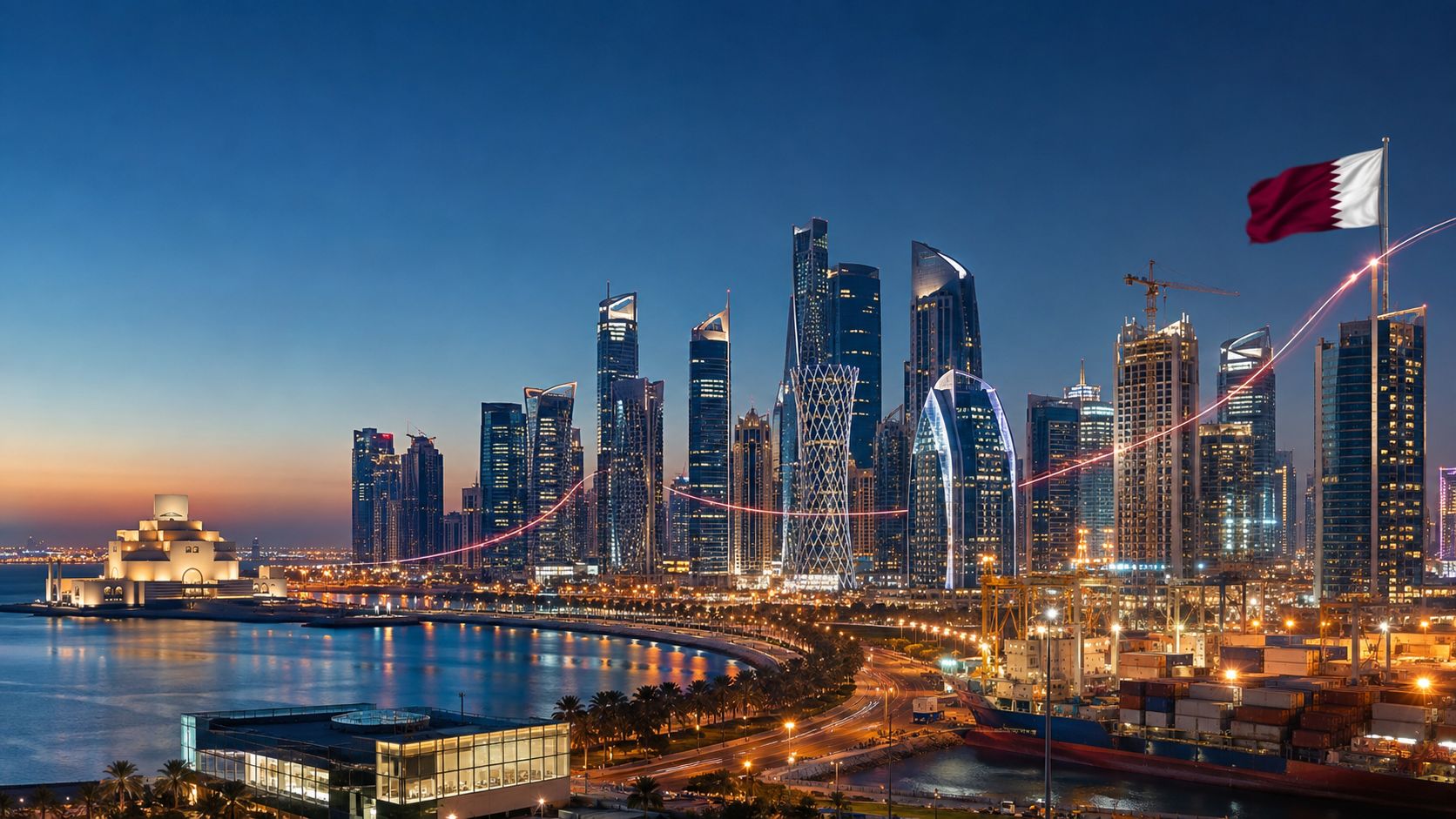
Qatar's economic architecture continues its structural shift as non-hydrocarbon sectors deliver sustained momentum, according to the latest Qatar Central Bank assessment. Manufacturing, logistics, and financial services collectively offset hydrocarbon revenue volatility, with private sector credit growth maintaining double-digit trajectories through the first half.
Banking sector balance sheets reflect this diversification, with aggregate assets expanding beyond QR1.8 trillion as loan-to-deposit ratios stabilize near 95%. Capital adequacy ratios across the three listed lenders exceed 17%, well above Basel III minimums, providing ample headroom for continued credit deployment into strategic non-energy sectors.
The monetary policy framework remains calibrated to support this transition, with the QCB maintaining the repo rate at 6.0% while deploying targeted liquidity facilities for SME financing and green infrastructure projects. Foreign reserve coverage of broad money stands at 115%, insulating the peg from external shock transmission.
Regional implications are significant for Gulf cooperation council peers navigating similar diversification mandates. Qatar's model demonstrates how banking sector depth can amplify non-oil multipliers, offering a template for UAE and Saudi financial institutions recalibrating credit allocation toward knowledge-economy verticals.
Key insights
- Non-hydrocarbon GDP contribution exceeds 65% for third consecutive quarter, reducing fiscal breakeven oil price below $55/bbl
- Banking sector NPL ratio holds at 2.1% despite aggressive credit expansion, reflecting strengthened underwriting standards
- QCB's targeted liquidity facilities have directed QR42bn toward manufacturing and technology sectors since 2023
Why it matters
Qatar's validated diversification template proves banking sector resilience can accelerate non-hydrocarbon multipliers without compromising financial stability. For Gulf institutional investors, this signals durable credit quality in regional banks exposed to knowledge-economy lending, while sovereign wealth allocations can confidently underweight hydrocarbon beta.
Source: Gulf Times