Dr. Mahmoud Mohieldin at GCC FMT 2026: The Gulf Leads on Low Inflation, Fiscal Discipline and AI Readiness
In his keynote on the global financial climate at the 6th GCC Financial Markets & Treasury Conference, Dr. Mahmoud Mohieldin, UN Special Envoy on Financing the 2030 Agenda, pointed to the GCC's low inflation, sound public finances and leadership on AI readiness, and set out how investors and policymakers can turn risk into investable projects.
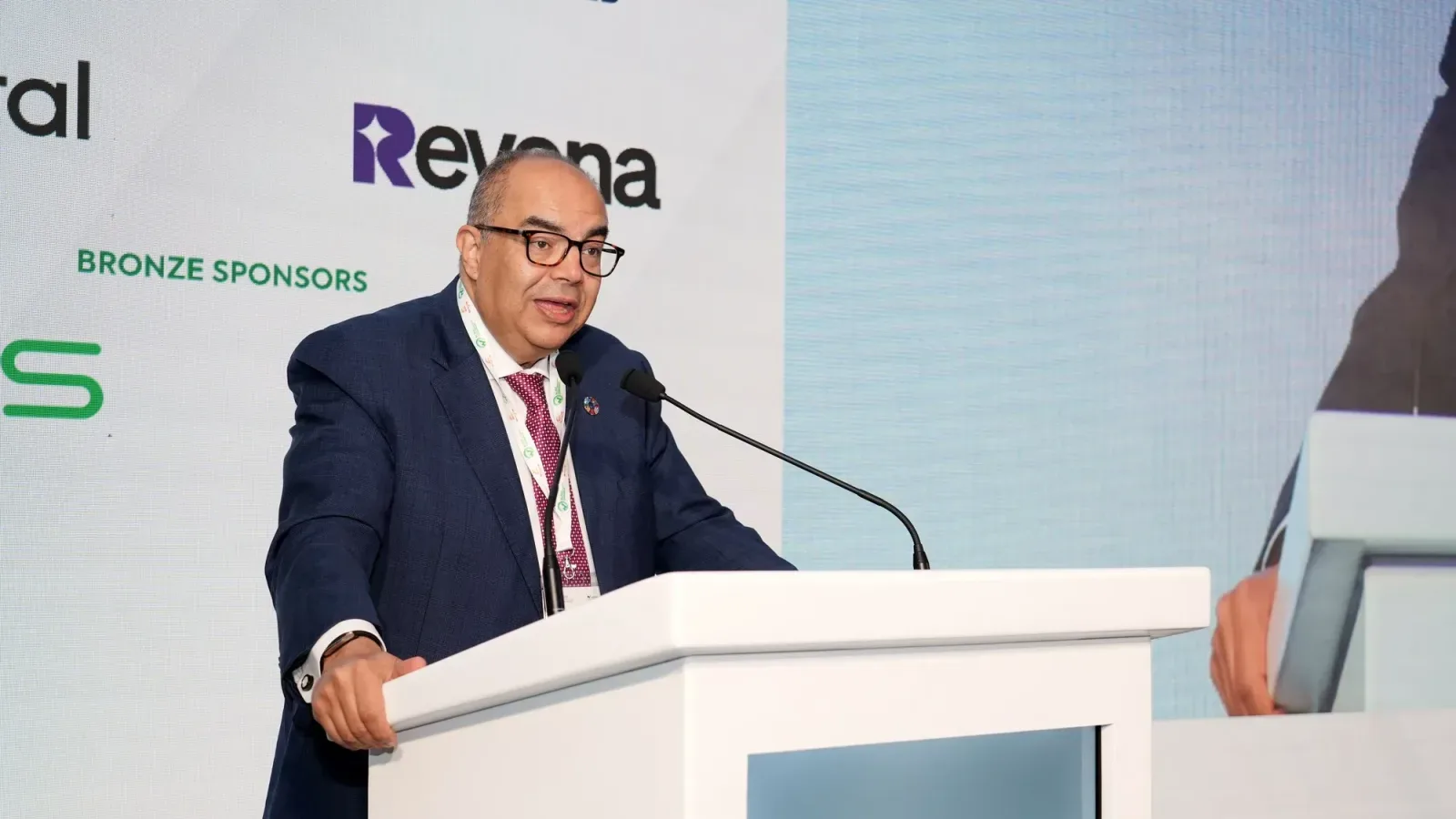
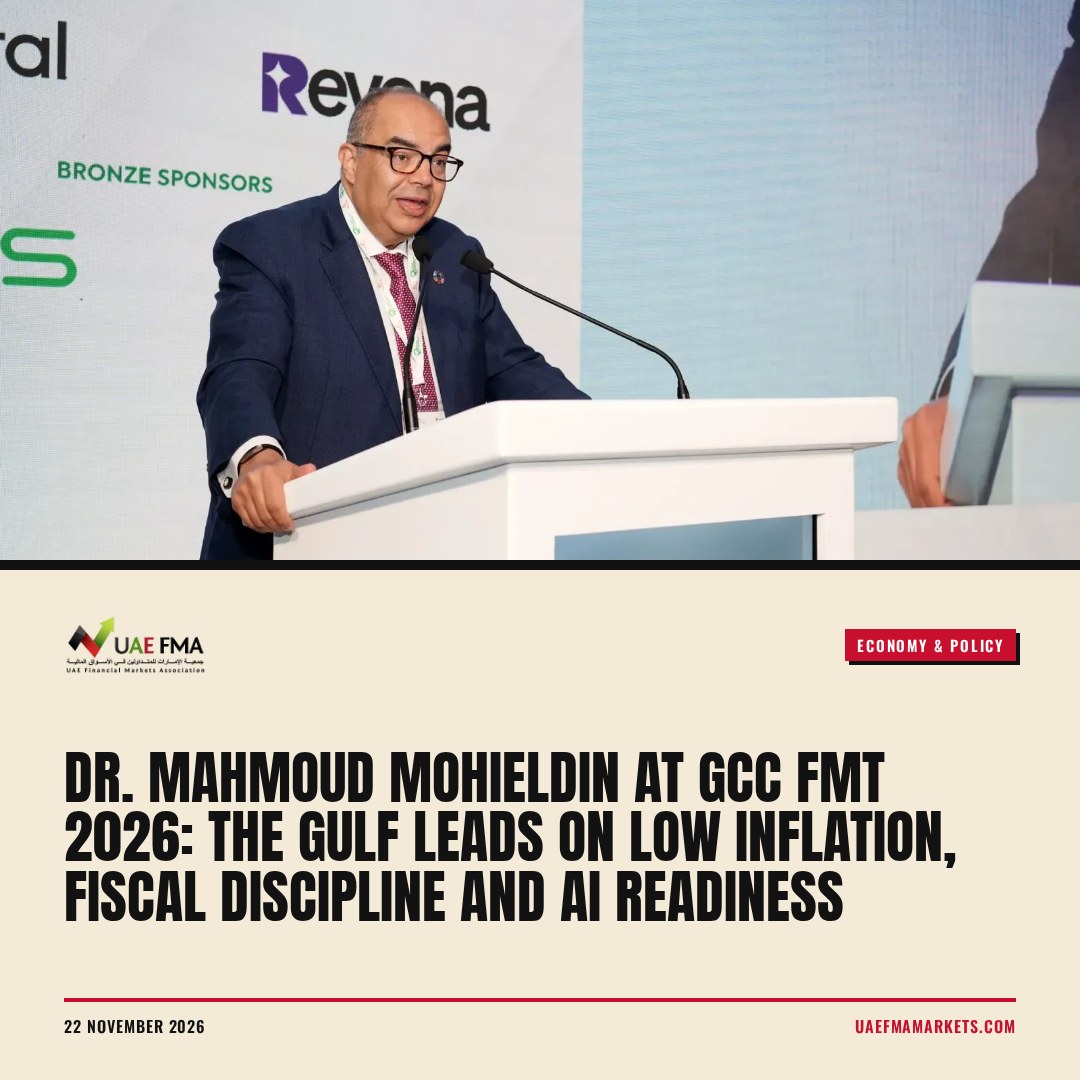
The Gulf economies stand out for low inflation, sound public finances and readiness for artificial intelligence, Dr. Mahmoud Mohieldin, United Nations Special Envoy on Financing the 2030 Agenda, told the 6th GCC Financial Markets & Treasury Conference (GCC FMT 2026) in Dubai on Thursday 19 November.
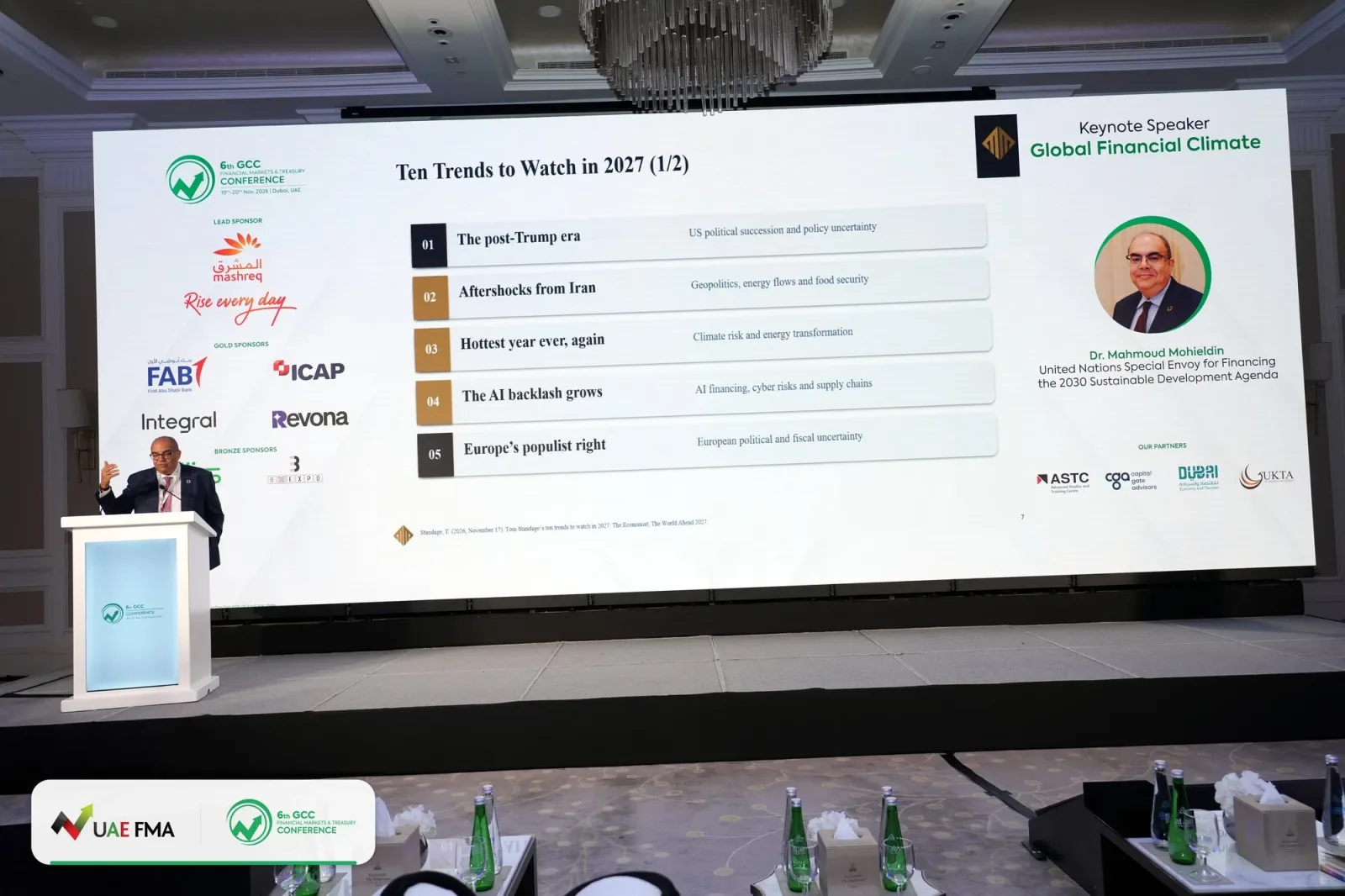
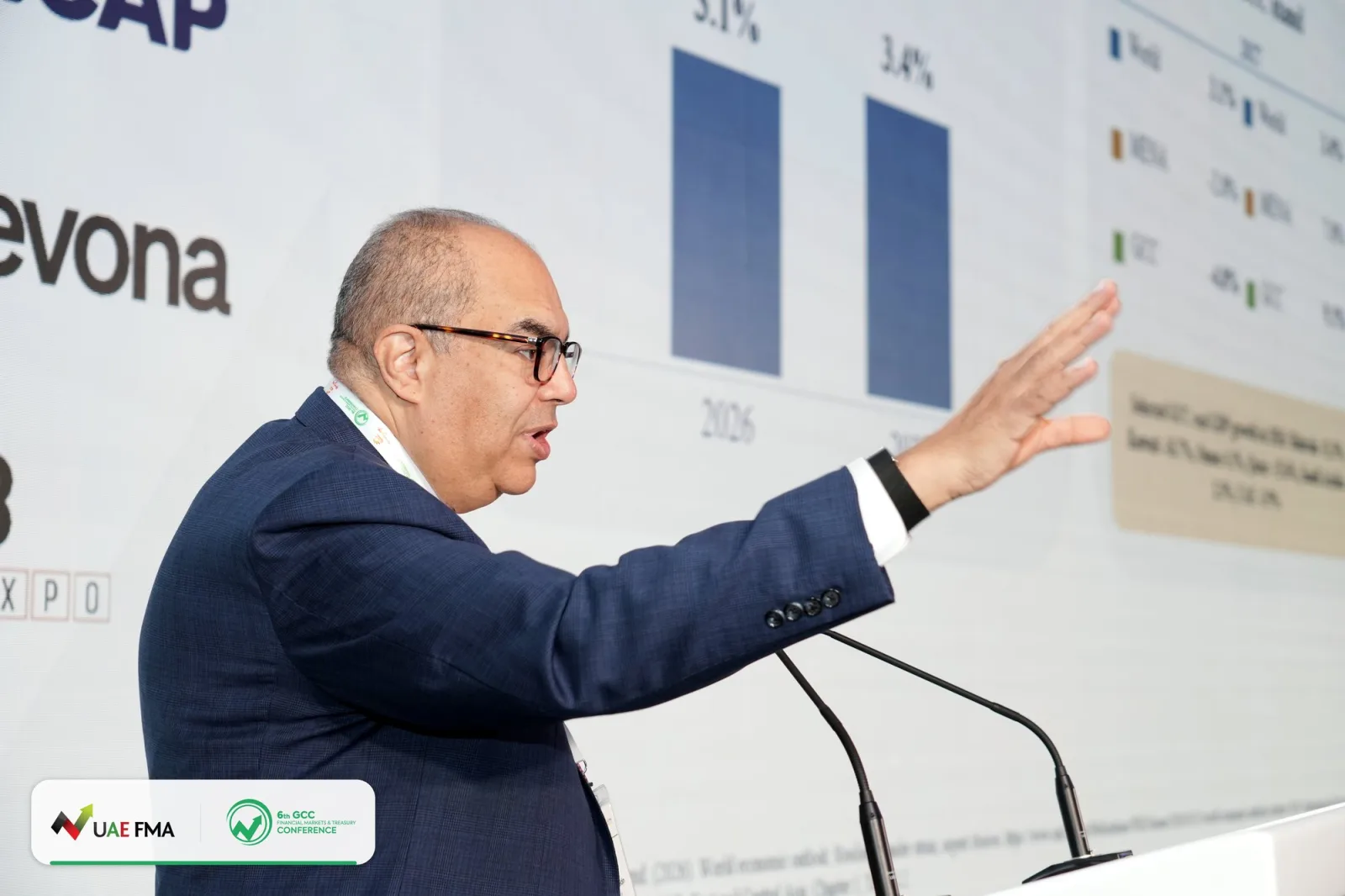
Delivering the opening keynote, "Global Financial Climate", minutes after receiving the conference's Lifetime Achievement Award from Sheikh Mohammed bin Maktoum bin Juma Al Maktoum, Dr. Mohieldin reminded a hall of bankers and treasurers that markets exist to serve the real economy. "There is no finance for finance," he said. "It's finance for something of substance: to improve the standard of living, inclusive growth and sustainable development."
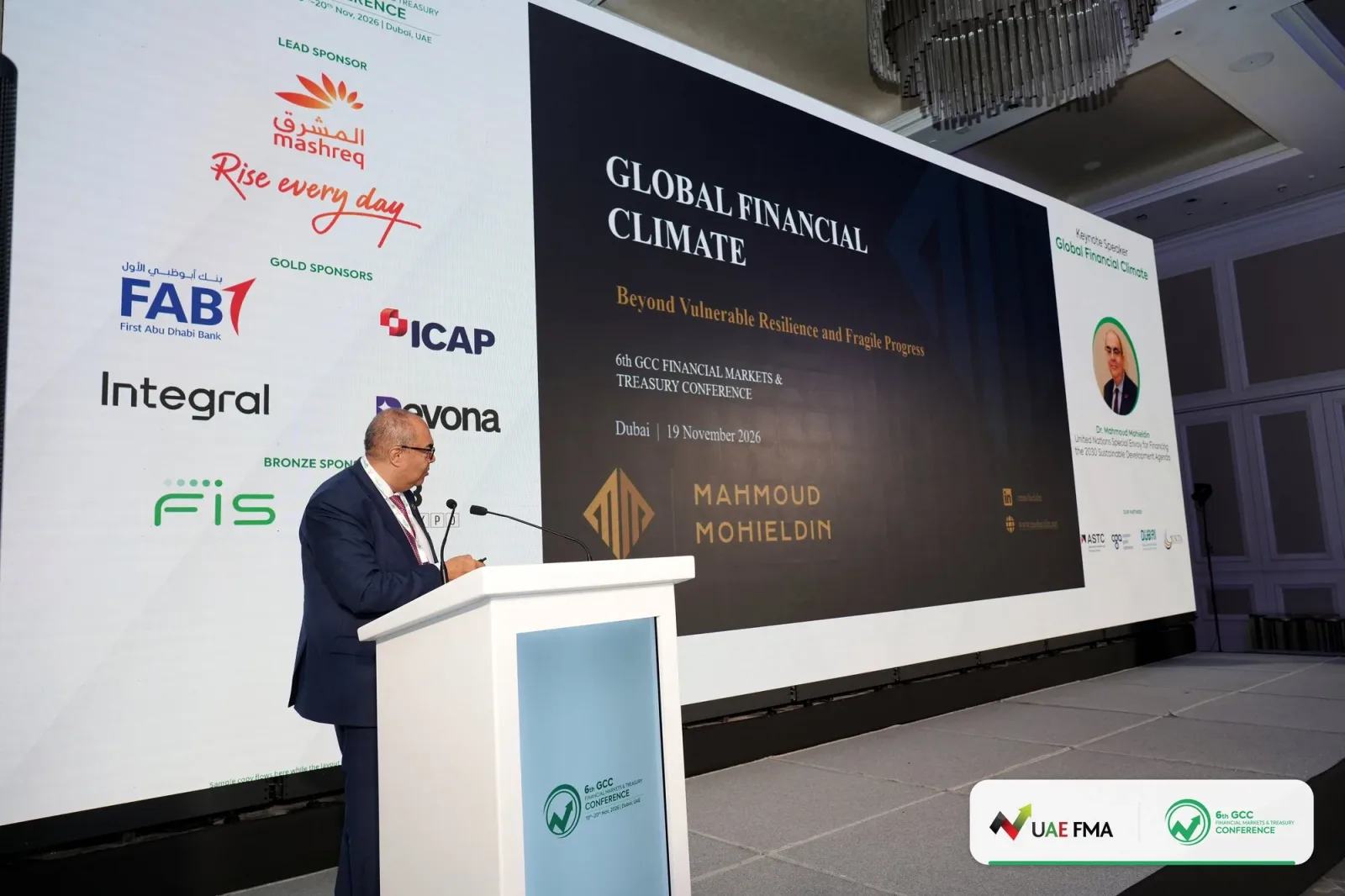
The GCC's macro strengths
Walking delegates through the latest IMF and World Bank data, he said the GCC has some of the lowest inflation rates in the world, averaging below 3%, which he credited to fiscal discipline, strong central banking and close coordination between monetary and fiscal policy. Debt-to-GDP ratios across most of the GCC sit below the 60% benchmark, he added, and the region's debt-service burden remains in a comfortable zone.
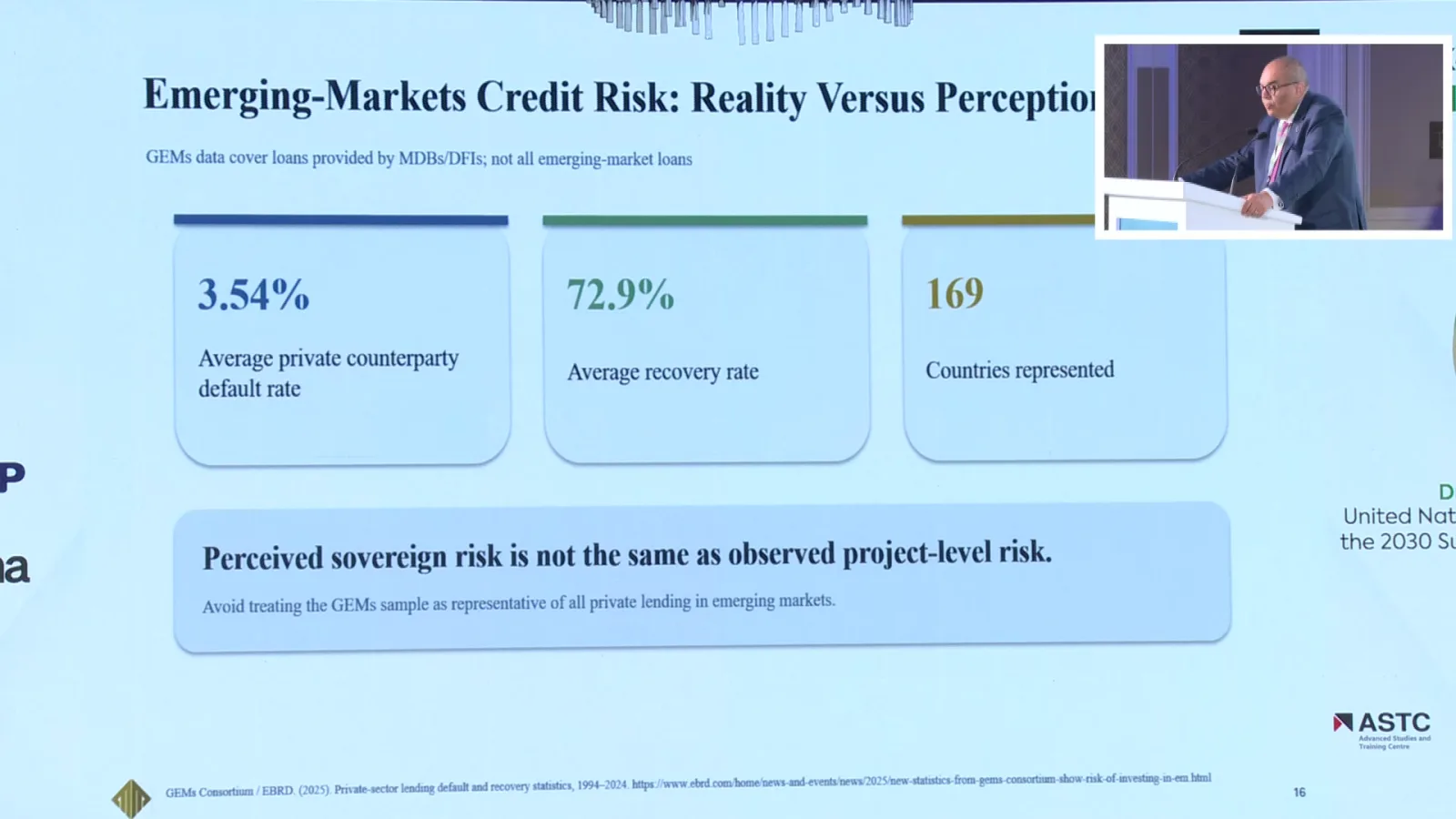
He also urged investors to separate actual from perceived risk in emerging markets. Data from the Global Emerging Markets (GEMs) risk database, compiled by multilateral development lenders, shows an average private counterparty default rate of 3.54% and an average recovery rate of 72.9%. "Actual risk is different from the perception," he said, "and the markets are not adjusting to such good news."
Energy: a business case, not an ideology
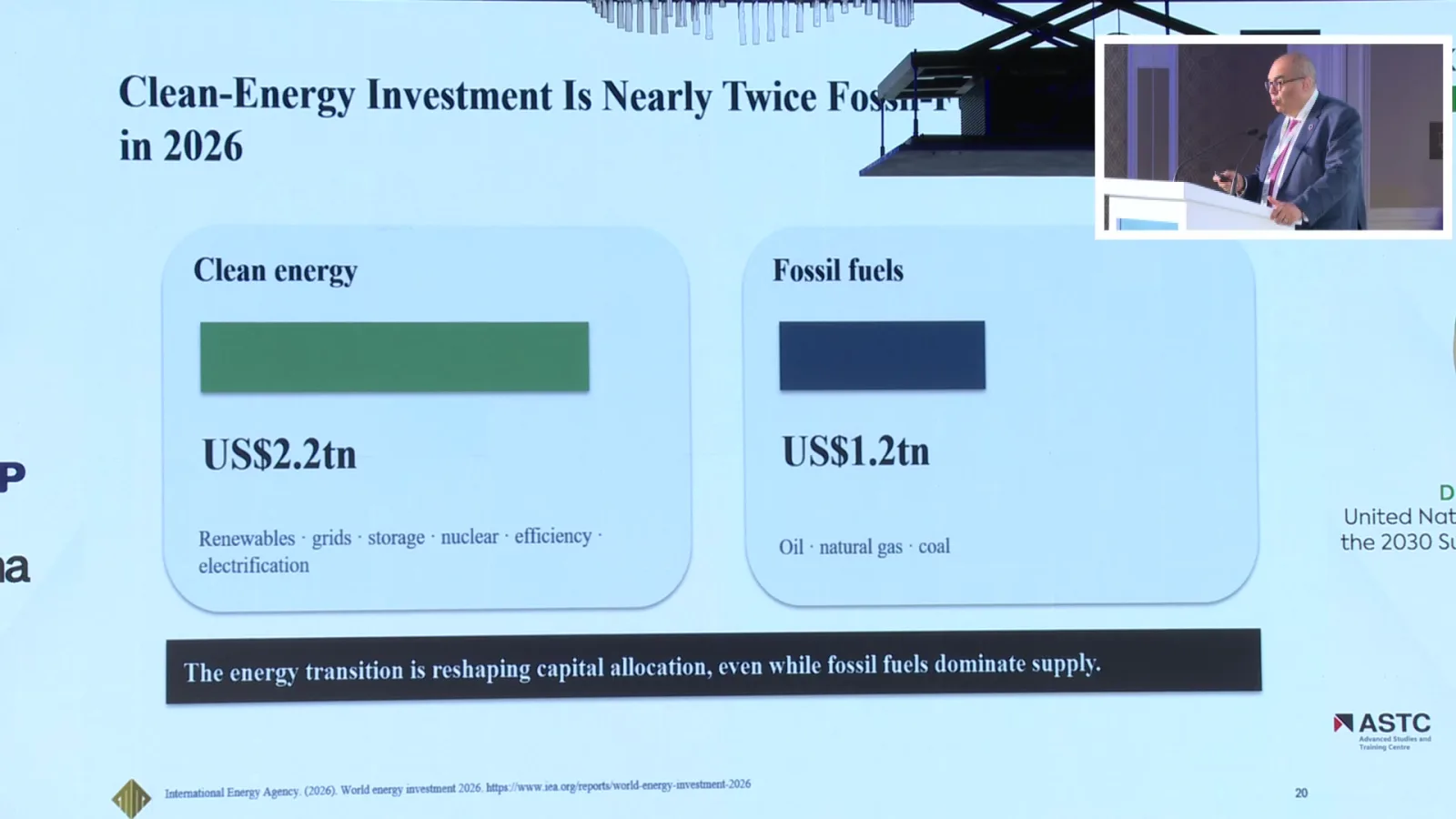
Clean-energy investment is set to reach about $2.2 trillion in 2026, nearly twice the $1.2 trillion going into fossil fuels, according to International Energy Agency figures in his presentation. "It's a business case. It's not an ideology," he said, noting that the UAE and Saudi Arabia host some of the world's largest and most cost-effective solar plants. He also highlighted the UN Water Conference that Abu Dhabi will co-host with Senegal from 8 to 10 December.
AI readiness: the UAE was early
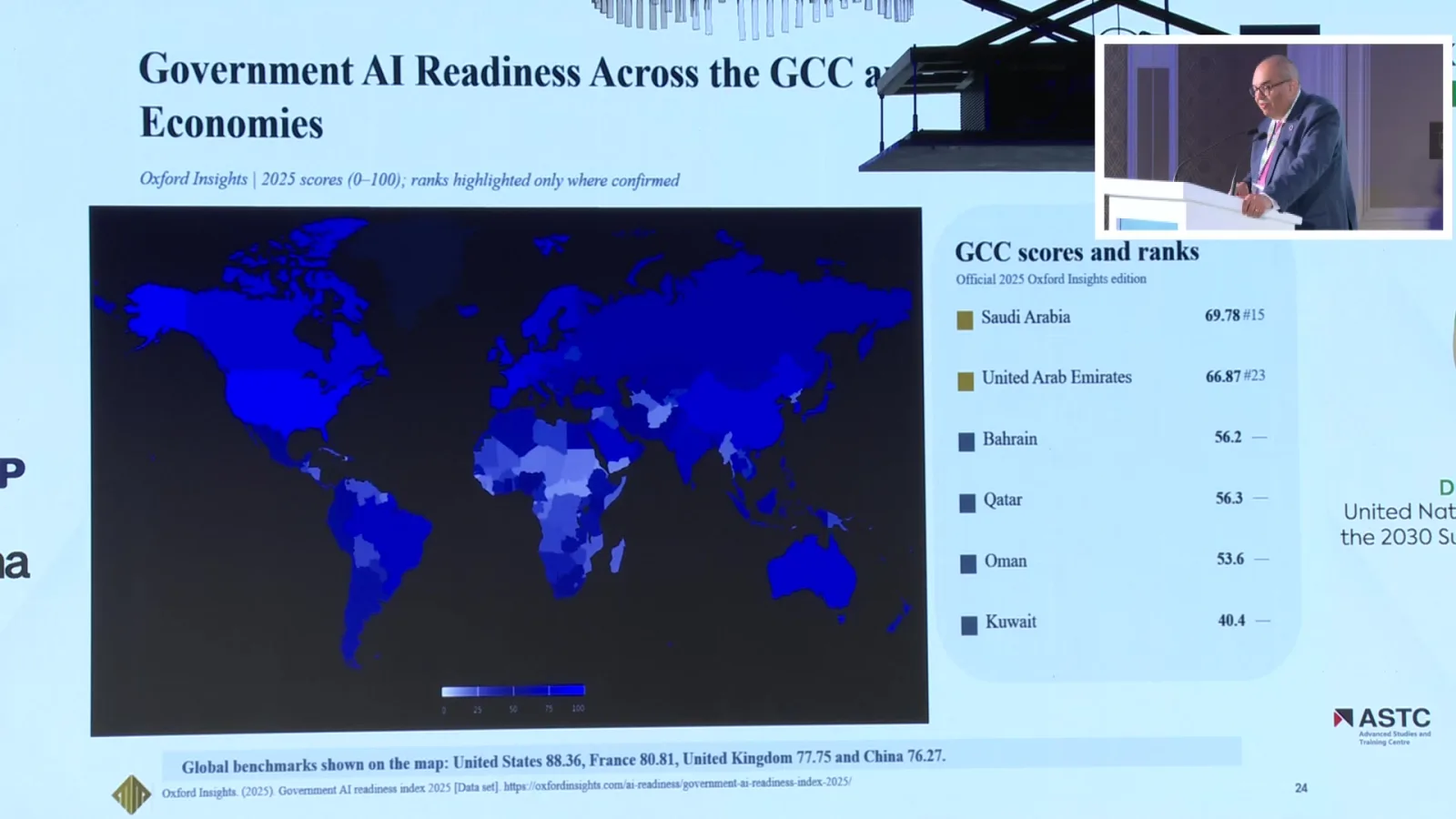
On artificial intelligence, Dr. Mohieldin said the IMF's AI Preparedness Index places the GCC, including the UAE, at the top among emerging and developing economies, while Oxford Insights' 2025 Government AI Readiness Index ranks Saudi Arabia 15th and the UAE 23rd globally. "It's not a coincidence," he said, recalling that His Highness Sheikh Mohammed bin Rashid Al Maktoum appointed the world's first minister for artificial intelligence in 2017. He encouraged an ecosystem approach to data centres, which need energy, water and financing.
From radical risk to investable projects
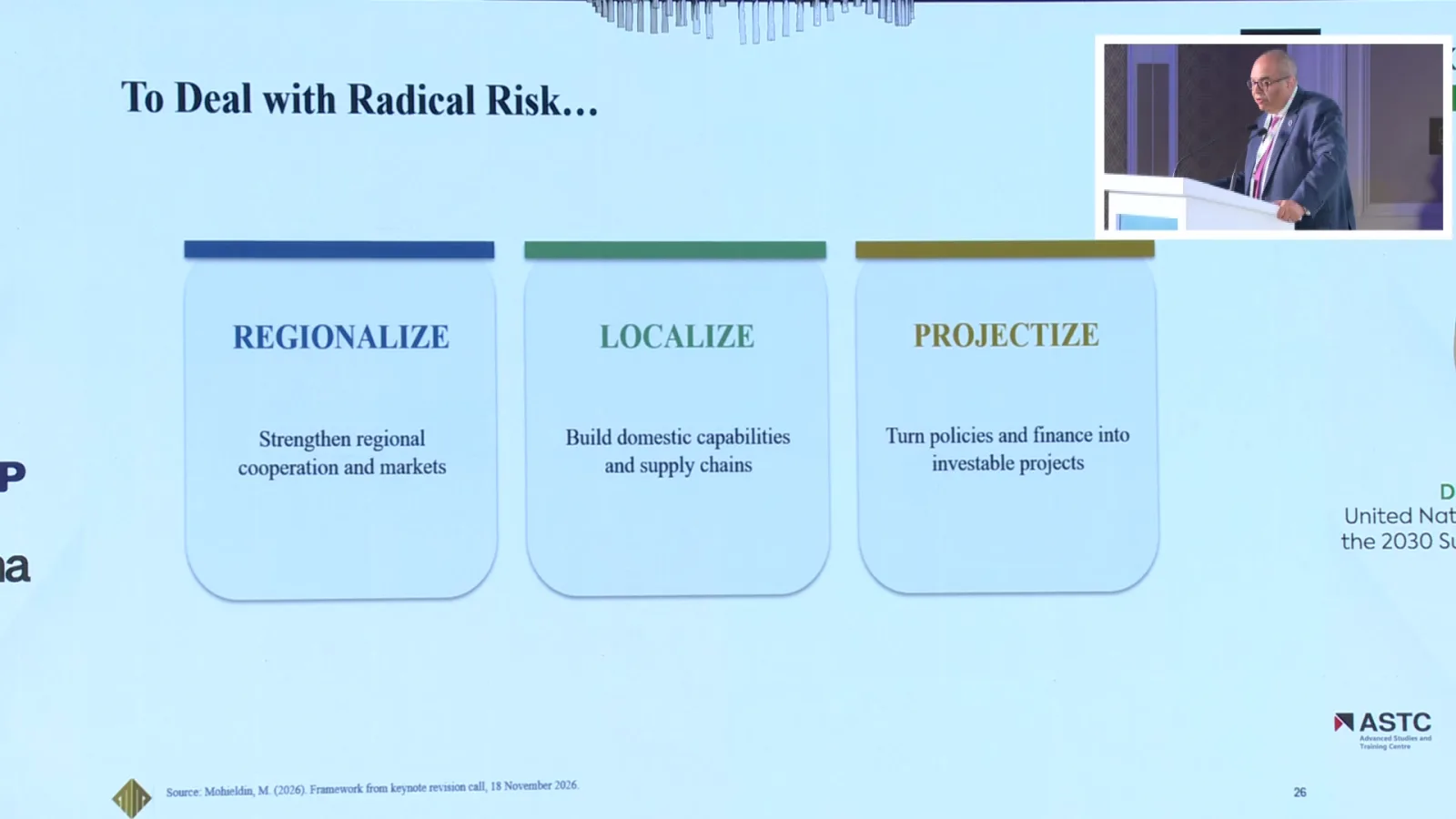
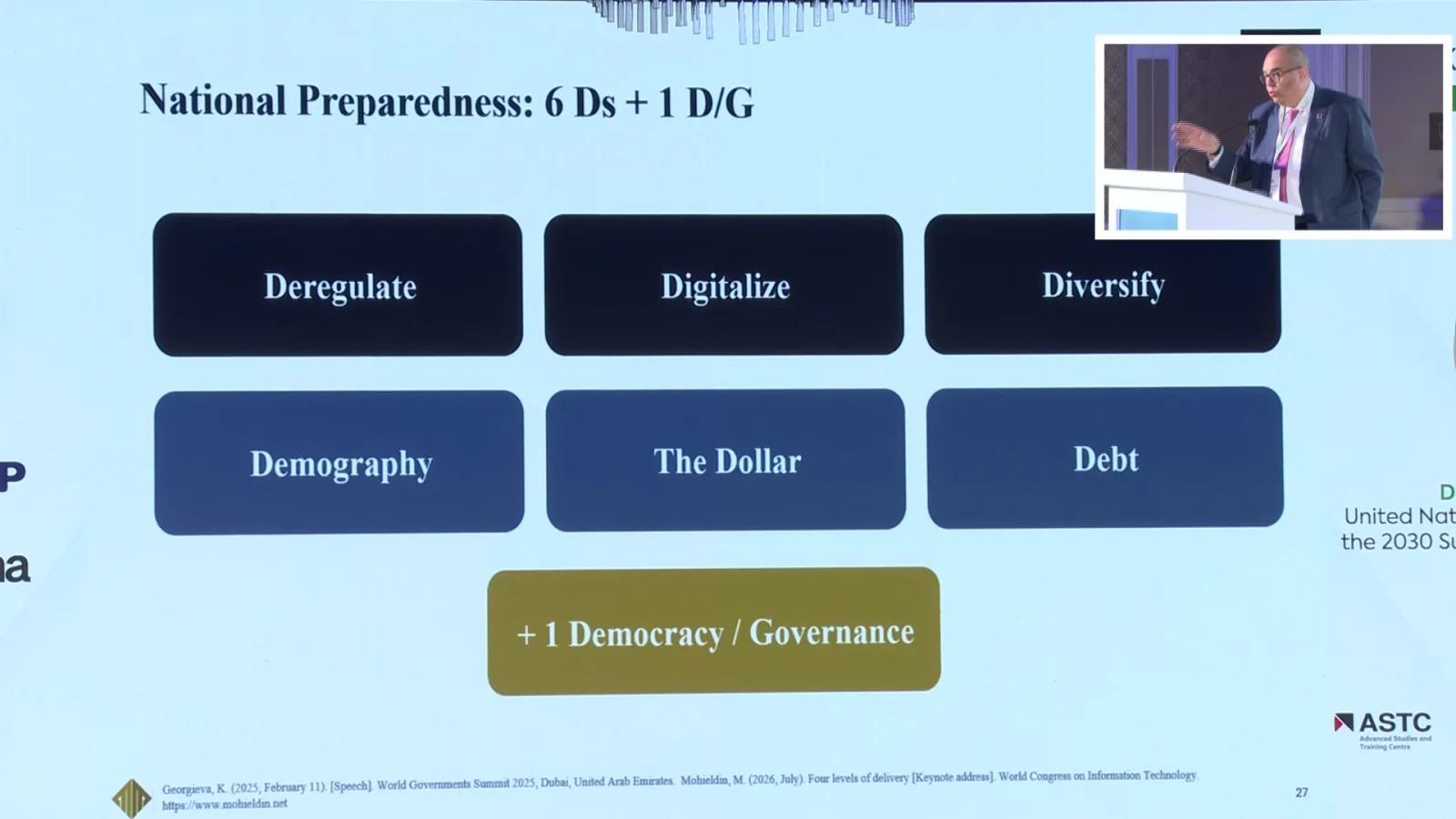
Rather than speaking of "uncertainty", Dr. Mohieldin proposed dealing with "radical risk" in three ways: regionalise by strengthening regional cooperation and markets, localise by building domestic capabilities and supply chains, and projectise by turning policies and finance into investable projects. To the IMF's "three Ds" for the Gulf (deregulate, digitalise and diversify), he added demography, the dollar and debt, plus democracy and governance.
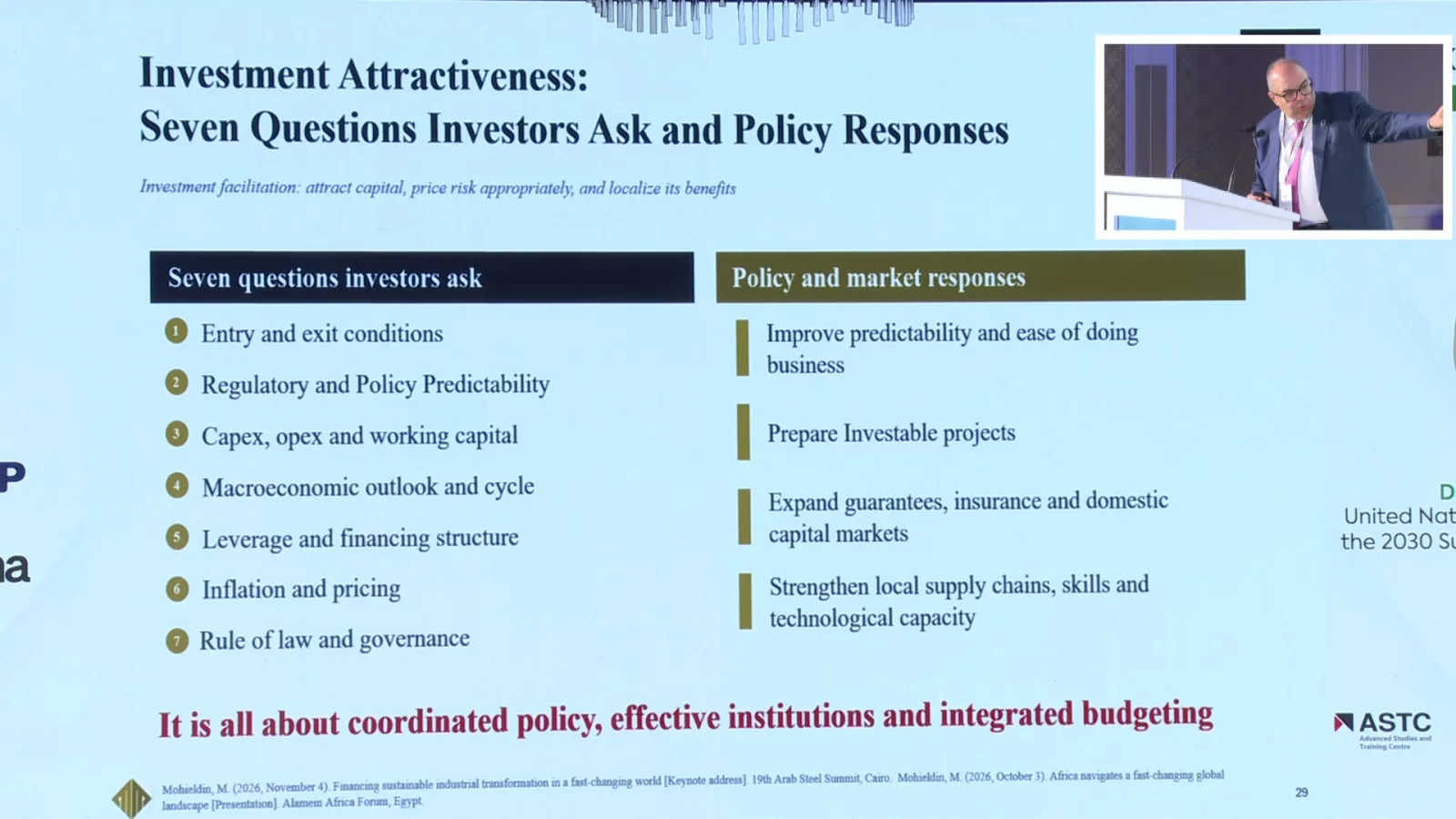
He closed with a checklist for countries competing for investment: insurance against risk, deeper local capital markets, blended finance, project preparation, risk sharing through public-private partnerships, and guarantees, all anchored in regulatory predictability and the rule of law. "It is all about coordinated policy, effective institutions and integrated budgeting," he said, adding that the UAE has shown "good answers" to the questions investors ask.

The newsroom of UAEFMA Markets, the news service of the UAE Financial Markets Association, covering UAE banking, treasury, capital markets and fintech.