Dr. Obaid Al Zaabi Unveils ALIF at GCC FMT 2026: A Tokenised Exchange to Fund the Arab World's Food SMEs
In his keynote at the 6th GCC Financial Markets & Treasury Conference, AAAID Chairman Dr. Obaid Al Zaabi traced the rise of UAE capital markets and presented ALIF, a tokenised exchange where Arab agriculture and food SMEs can raise capital from global investors.
 By UAEFMA Editorial Team
Dubai, November 22, 2026 9 min read
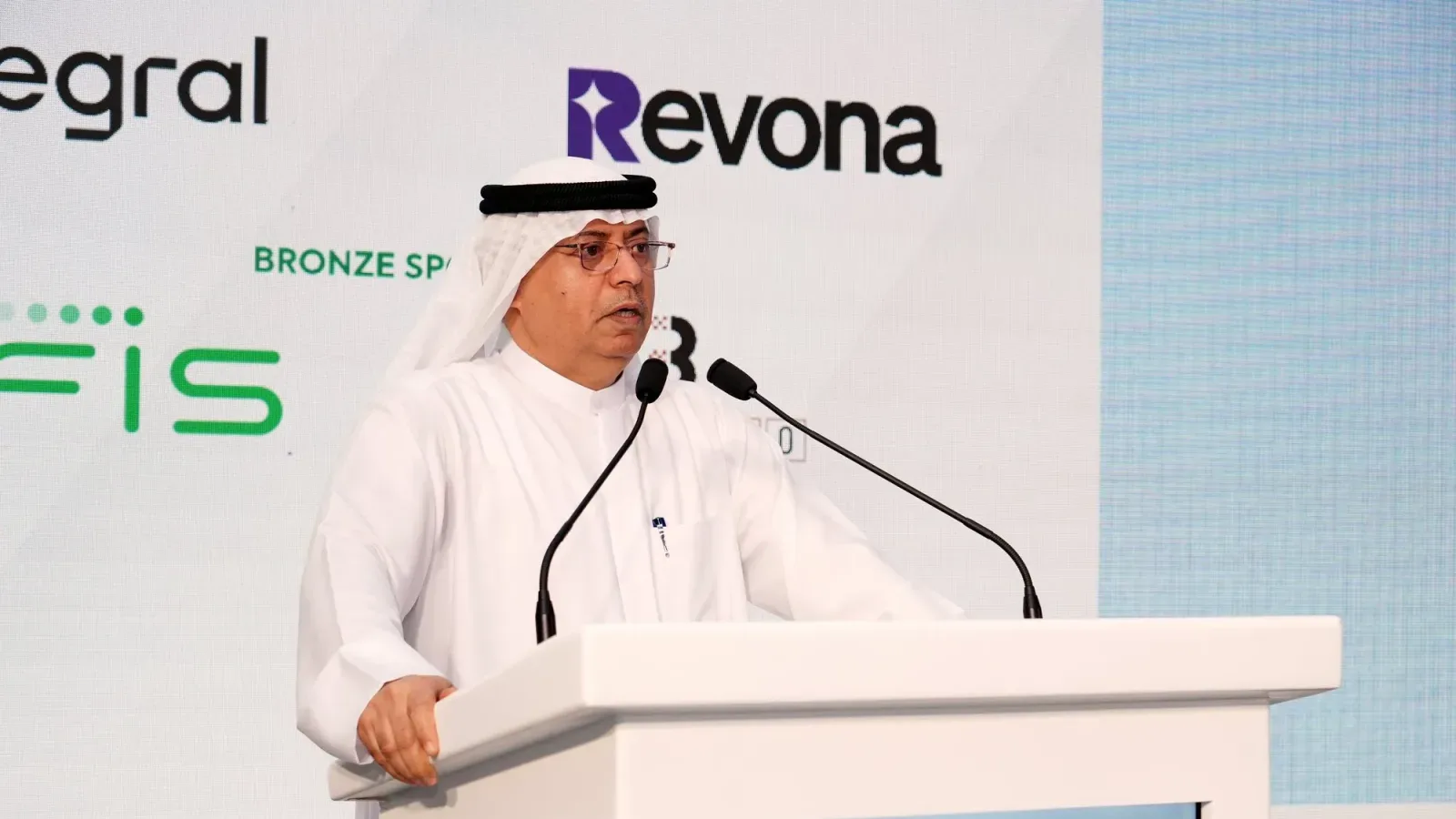
H.E. Dr. Obaid Saif Hamad Al Zaabi, Chairman of the Board of the Arab Authority for Agricultural Investment and Development (AAAID), used his keynote at the 6th GCC Financial Markets & Treasury Conference (GCC FMT 2026) in Dubai on Thursday 19 November to present ALIF, a digital, tokenised exchange designed by AAAID through which agriculture and food SMEs across the Arab world can raise capital from global investors.
Thanking His Highness Sheikh Mohammed bin Maktoum bin Juma Al Maktoum for his patronage and UAEFMA Chairman Mohammed Al Hashemi for the invitation, Dr. Al Zaabi opened with an overview of how the UAE's financial markets were built.
From frontier to emerging, and onto the IOSCO board
He described a journey that began around 2000, when market regulation was put in place alongside the Dubai Financial Market and the Abu Dhabi exchange, with the Securities and Commodities Authority working intensively to build the regulatory regime for capital and commodity markets. In parallel, he said, the UAE obtained full ordinary and multilateral IOSCO membership, became the first Arab jurisdiction to hold a seat on the IOSCO board and later its vice chair, and implemented IOSCO standards.
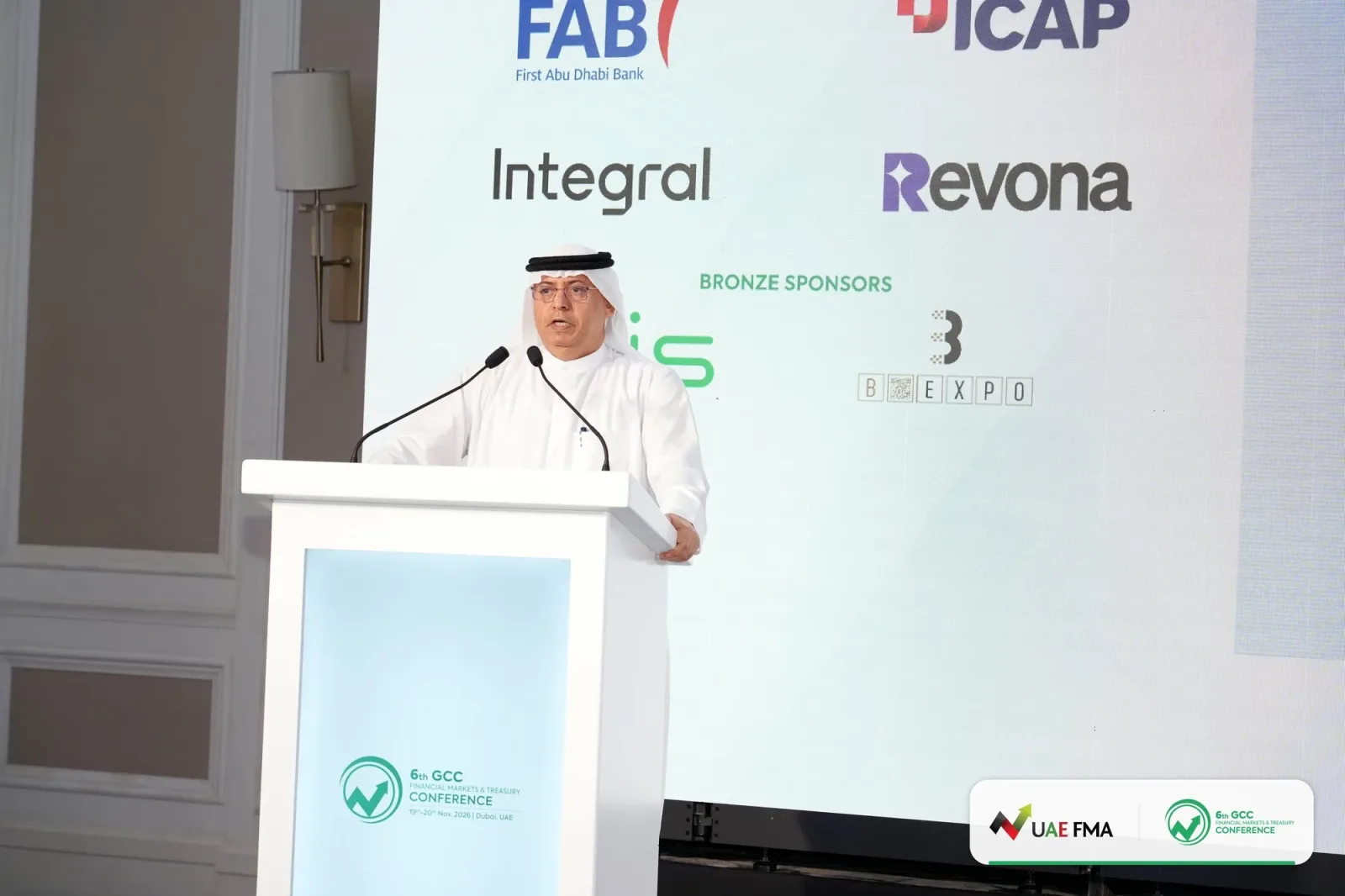
The UAE's exchanges, he said, were upgraded from frontier to emerging-market status, trading, settlement and depository functions were separated in line with IOSCO standards, and around 70 regulations were issued to turn simple brokers into full-service brokerage firms. "Nowadays, our financial markets are top-grade financial markets," he said, able to compete with developed markets and attract more business to the region.
The missing middle of the food chain
Turning to his current role at AAAID, Dr. Al Zaabi pointed to a financing gap in agriculture. Large agribusinesses can borrow or lease and smallholders can reach microfinance, but the processors, bakers, cold-chain operators, hatcheries, feed mills and regional distributors in between, the SMEs that turn harvests into food, "often have nowhere to go." Their tickets are too small for international investors, local banks ask for collateral, investors have no exit before maturity, and cross-border settlement is slow and costly.
ALIF, named after the first letter of the Arabic alphabet "because every story begins with it", is AAAID's answer. SMEs list digital tokens representing a defined claim on a real asset: a share of equity, receivables from a creditworthy payer or a warehouse receipt for stored grain. Investors in Dubai, London, Singapore or Riyadh can buy, hold and trade them on the exchange. "Capital should follow food. Small should not mean unfinanceable. Liquidity builds trust," he said.
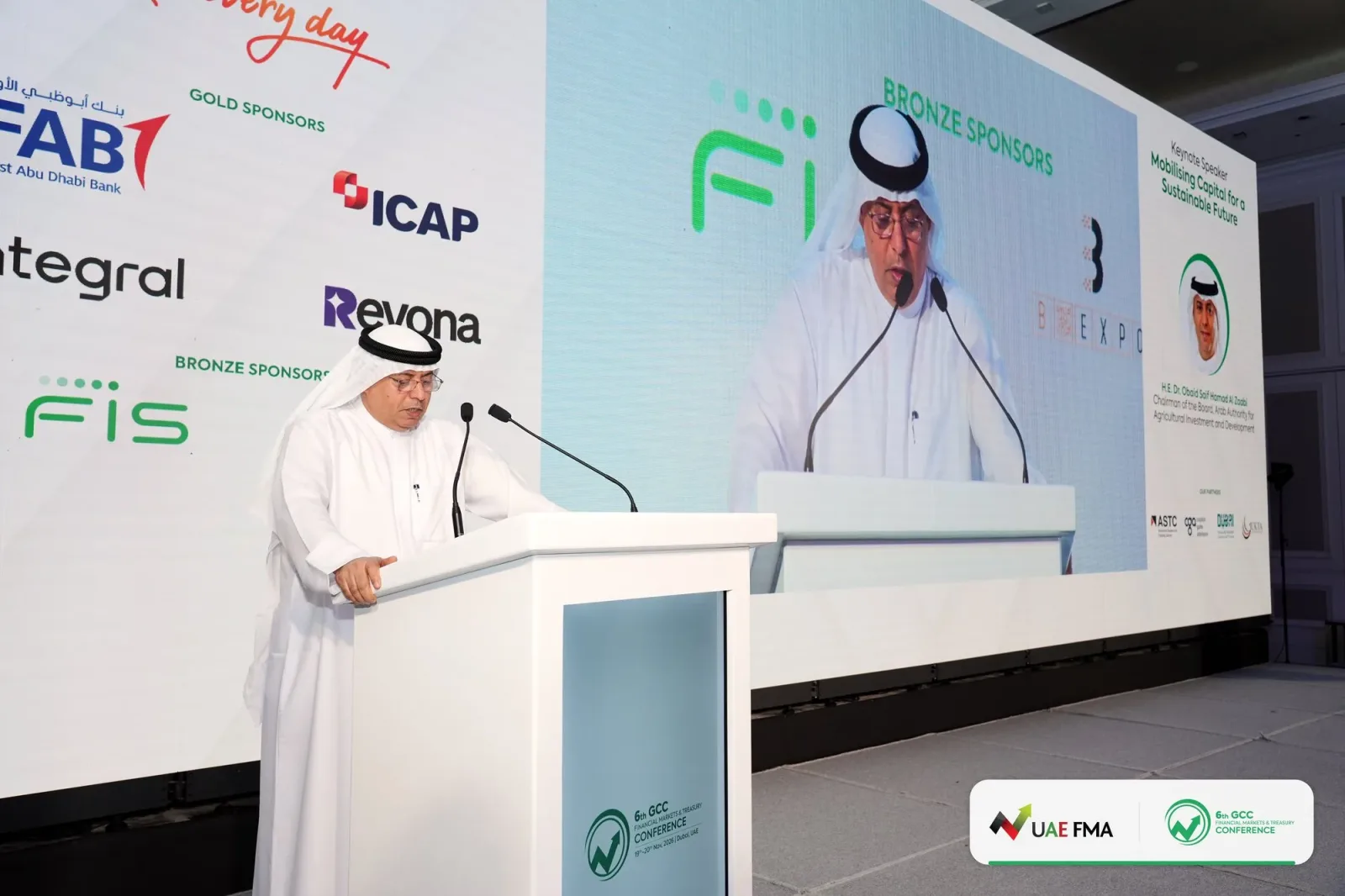
The platform rests on five pillars, he explained: strict selection, real-asset backing, risk mitigation, transparency and disclosure, and market integrity.
Four requests to the Gulf's financial community
Dr. Al Zaabi said he brought ALIF to a GCC treasury and markets audience because "the capital, the financial infrastructure and the regulatory ambition are here." For treasuries, it could offer short-dated, asset-backed paper tied to food security, alongside equity participation in growing SMEs. He closed with four requests:
- Investors and treasuries: consider a pilot allocation and help size the first issuance.
- Banks: help design custody, settlement and liquidity provision for the exchange.
- Regulators and ministries: work with AAAID on a sandbox and a clear rulebook so ALIF is safe from day one.
- Food and agriculture institutions: bring their SME pipelines and standards.
Full text of the keynote
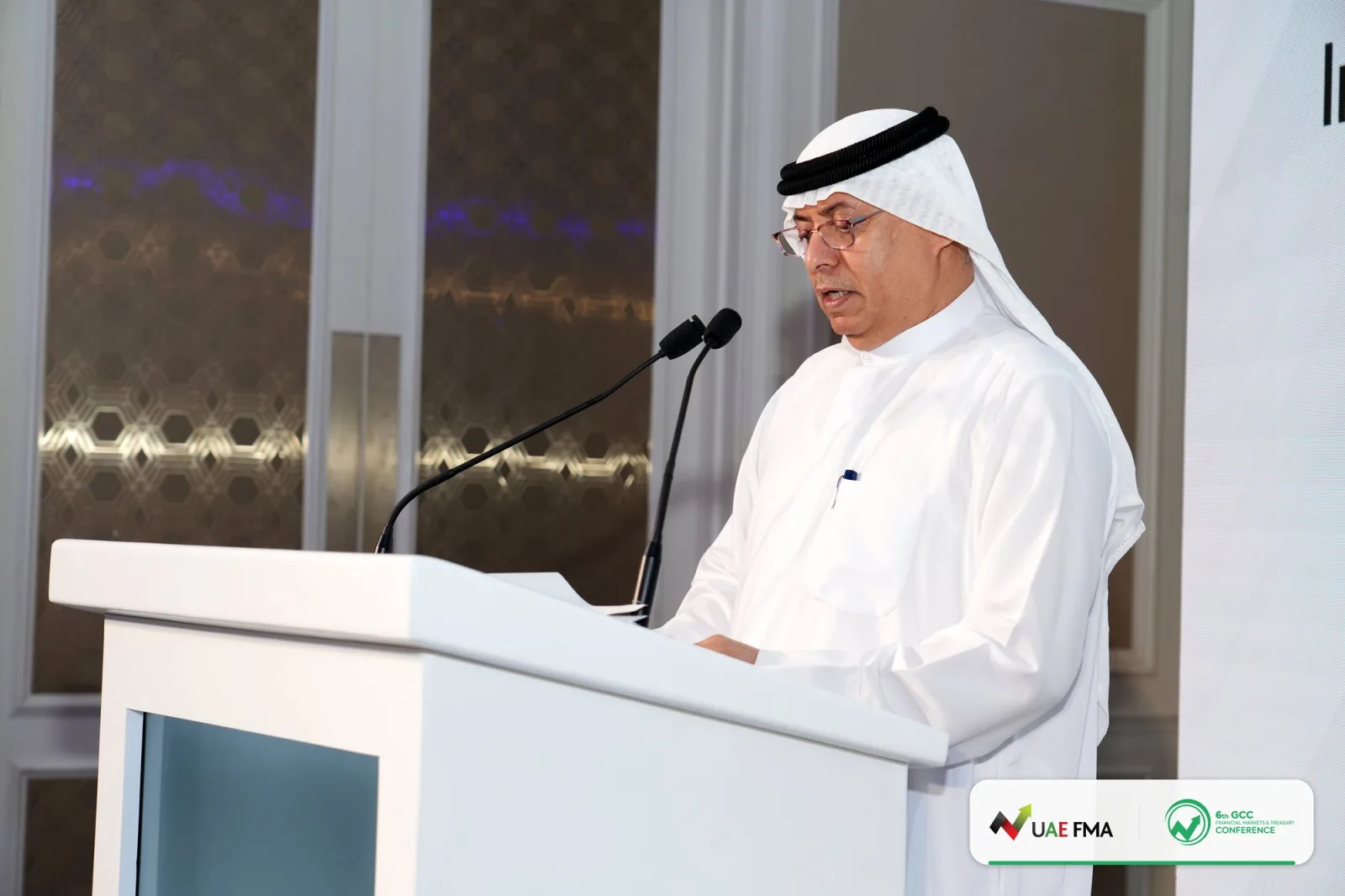
Good morning, ladies and gentlemen.
First of all, I would like to deliver my gratitude and appreciation to His Highness for his patronage of this conference, and to Mr. Mohammed, the Chairman, for his invitation. Maybe I am a little bit away from the financial markets, but I would love to give a short overview and put a light on the progress of financial markets in the United Arab Emirates.
It is a journey we started around 2000, when the regulations were put in place on the ground. Then we had DFM, and we already had the Abu Dhabi exchange as well. In fact, the exchanges started before the regulator, the Securities and Commodities Authority. Recently they changed its name; before, it was ESCA. ESCA worked intensively to develop the regulatory regime for the whole ecosystem working in capital markets, and commodity markets as well, under our jurisdiction. In parallel, we worked internationally with IOSCO, and we obtained full ordinary IOSCO membership and multilateral membership. Then, gradually, we became the first Arab jurisdiction to hold a seat on the board of IOSCO. IOSCO is the international standard setter for all jurisdictions and exchanges around the globe; all countries are members of this organisation. The UAE became vice chairman at that time, the first Arab country to hold this position. All IOSCO standards have been implemented, and membership was granted to the United Arab Emirates.
We also worked to develop the financial markets, DFM and the Abu Dhabi exchange, and we successfully upgraded the markets from frontier to emerging markets. We worked with the top management of these markets to segregate their functions: trading, settlement and depository. They have been very successful, and we provided full support to segregate all these functions according to IOSCO standards. At that time, we published around 70 regulations to upgrade brokerage firms from simple brokers to full brokers, so that a broker can provide full-fledged brokerage services alongside other financial services.
What I am going to say is that, nowadays, as you can see, our financial markets are top-grade financial markets. They compete with advanced developed markets. They have all the technology, processes and procedures that qualify them to attract more business to this region. As we are speaking now from Dubai, a flourishing, advanced economy that provides tremendous opportunities for investors to grow and establish their business in this region, that is the journey we have concluded and delivered to investors and prospective investors.
Today, because I have moved to sovereign funds, at the Arab Authority for Agricultural Investment and Development and food security, we are still talking about financial markets. What we have done is develop a kind of capital platform. We found that something was missing in the circle of financial operations in agriculture. We found a missing gap: the so-called agri-SMEs. The gap is widest in the Middle East, in the middle of the food chain. In this area, large agribusinesses can borrow or lease, and smallholders can reach microfinance. But the processors, bakers, cold-chain operators, hatcheries, feed mills and regional distributors in between, the small and medium enterprises that turn harvests into food, often have nowhere to go.
We have seen that their tickets are too small for international investors to underwrite one by one, and local banks ask for collateral for this kind of business. Investors who do commit have no way out before maturity. Cross-border settlement is slow, costly and opaque.
So we have introduced ALIF. Alif is the first letter of the Arabic alphabet, and we chose the name because every story begins with it. ALIF is a digital, tokenised exchange designed by the Arab Authority for Agricultural Investment and Development, where agriculture and food SMEs from across the Arab world can raise capital from global investors. In particular, SMEs list digital tokens to raise capital that represents a defined claim on a real asset: a share of equity, receivables from a creditworthy payer, or a warehouse receipt for stored grain. And investors in Dubai, London, Singapore or Riyadh can buy these tokens, hold them and trade them on the exchange.
Why have we designed this platform? Because we believe that capital should follow food. Small should not mean unfinanceable. Liquidity builds trust.
So how will ALIF work, and how does it protect investors? We have concentrated on five pillars. Selection: we are strengthening the selection criteria. Real-asset backing: our authority has real assets, investing in companies that exist on the ground and operate very well across Arab countries. We also have a mechanism for risk mitigation, and of course transparency, with disclosure on the ground. And finally, market integrity. As you can see, the UAE operates on a massive, solid foundation of financial markets. So why the GCC, and what do we ask?
Why bring this to the GCC Treasury and Markets Conference? Because the capital, the financial infrastructure and the regulatory ambition are here. The region's sovereign funds, banks, family offices and corporate treasuries already look for real-asset exposure, short-duration yield and participation in equity. Food is one of the few sectors where the economics and the strategic interest point the same way. For treasuries, it could offer something different from the usual choices: short-dated, asset-backed paper tied to the food your own economy depends on, and participation in the equity of small SMEs to support their growth.
So I will leave you with four requests. To investors and treasuries: consider a pilot allocation and help us size the first issuance. To banks: help us design custody, settlement and liquidity provision for the exchange. To regulators and ministries: work with us on a sandbox and a clear rulebook, so ALIF is safe from the first day. To our fellow institutions in food and agriculture: bring your pipelines of SMEs and your standards.
With this, I conclude my words. Thank you once again.
UAEFMA Editorial Team
The newsroom of UAEFMA Markets, the news service of the UAE Financial Markets Association, covering UAE banking, treasury, capital markets and fintech.